In a fast-moving, dynamic industry such as food and beverage, success is not merely dependent…
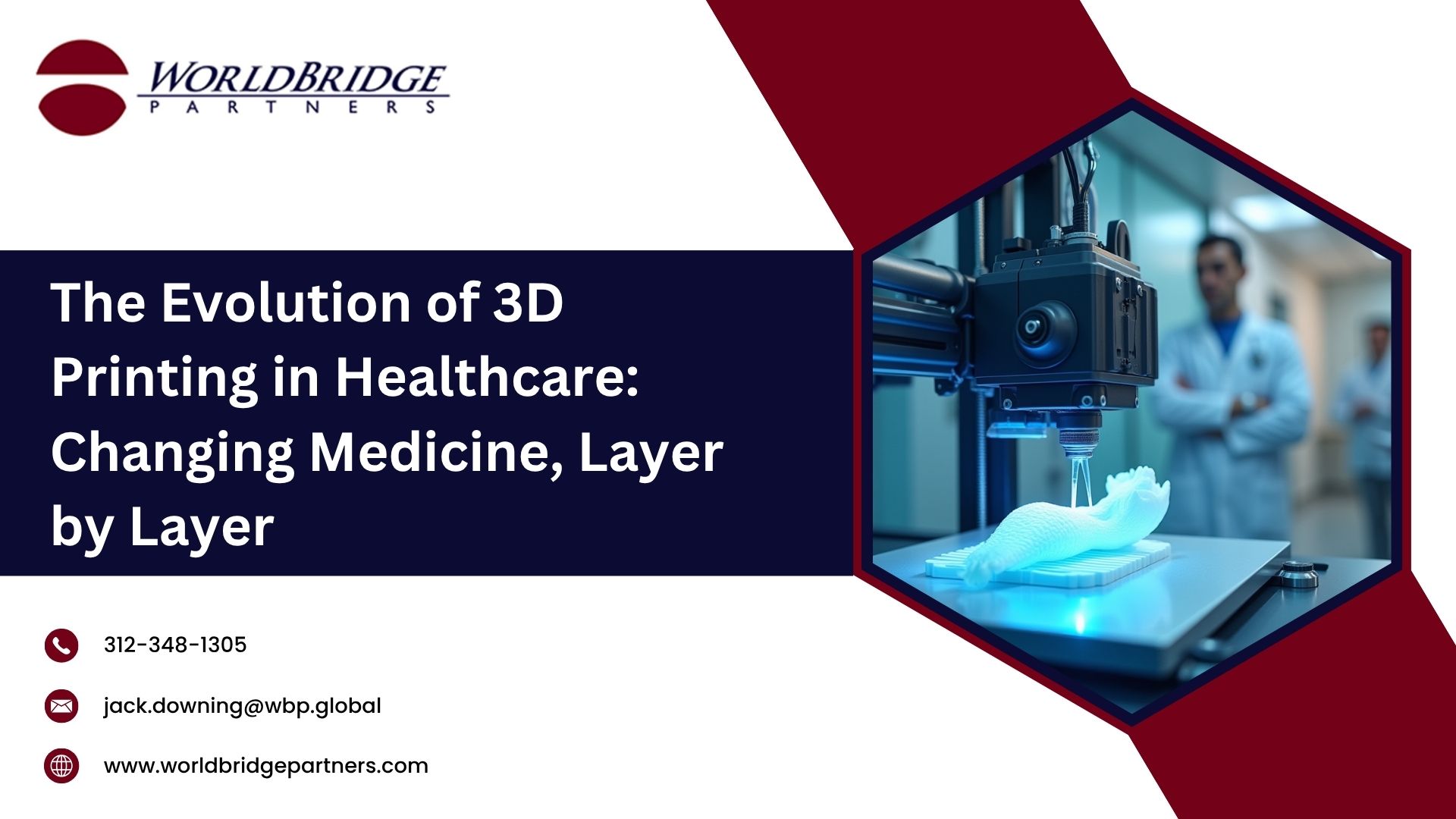
The Evolution of 3D Printing in Healthcare: Changing Medicine, Layer by Layer
Since its early days, 3D printing has come a long way, and now it is changing the healthcare sector in ways not considered possible before. From personalized implants to printed tissues, the technology is revolutionizing how physicians tackle treatment, surgery, and even the production of medicines.
The Early Days: From Prototypes to Useful Applications
Earlier, 3D printing in the medical sector was mainly used to produce medical equipment prototypes and anatomical models. Such models assisted surgeons in planning complex operations, thereby lessening the risks of surgery and enhancing patient results. With time, material developments and printing processes enabled direct manufacturing of functional medical equipment, prosthetics, and implants.
Recent Breakthroughs: Bioprinting and Personalized Medicine
The most thrilling developments in 3D printing involve bioprinting—applying bioinks made of living cells to build tissues and organ-like constructs. Scientists have even successfully 3D printed skin, cartilage, and tiny heart tissues. Such advancements are pushing us toward the potential of printing fully functional organs for transplant, solving the worldwide shortage of organ donors.
Besides bioprinting, 3D printing is also at the forefront of personalized medicine. Prosthetics, dental implants, and orthopedic devices are now manufactured with greater precision than ever, allowing for a better fit and quicker patient recovery. The pharmaceutical sector is also utilizing 3D printing to create patient-specific medication dosages, enhancing the efficacy of drugs and minimizing side effects.
Challenges and Future Prospects
While 3D printing holds immense promise, challenges remain. Regulatory approval for bio-printed tissues and organs is still in its early stages, and scaling up production for widespread clinical use requires significant research and investment. However, the future looks incredibly promising, with continuous advancements in biomaterials, AI-driven design optimization, and printing.
Conclusion
The history of 3D printing in medicine opens up new potential for patient care, improving precision, availability, and efficiency. As science progresses, there will be more revolutionary applications, ranging from regenerative medicine to on-demand printed organs.
Related Posts